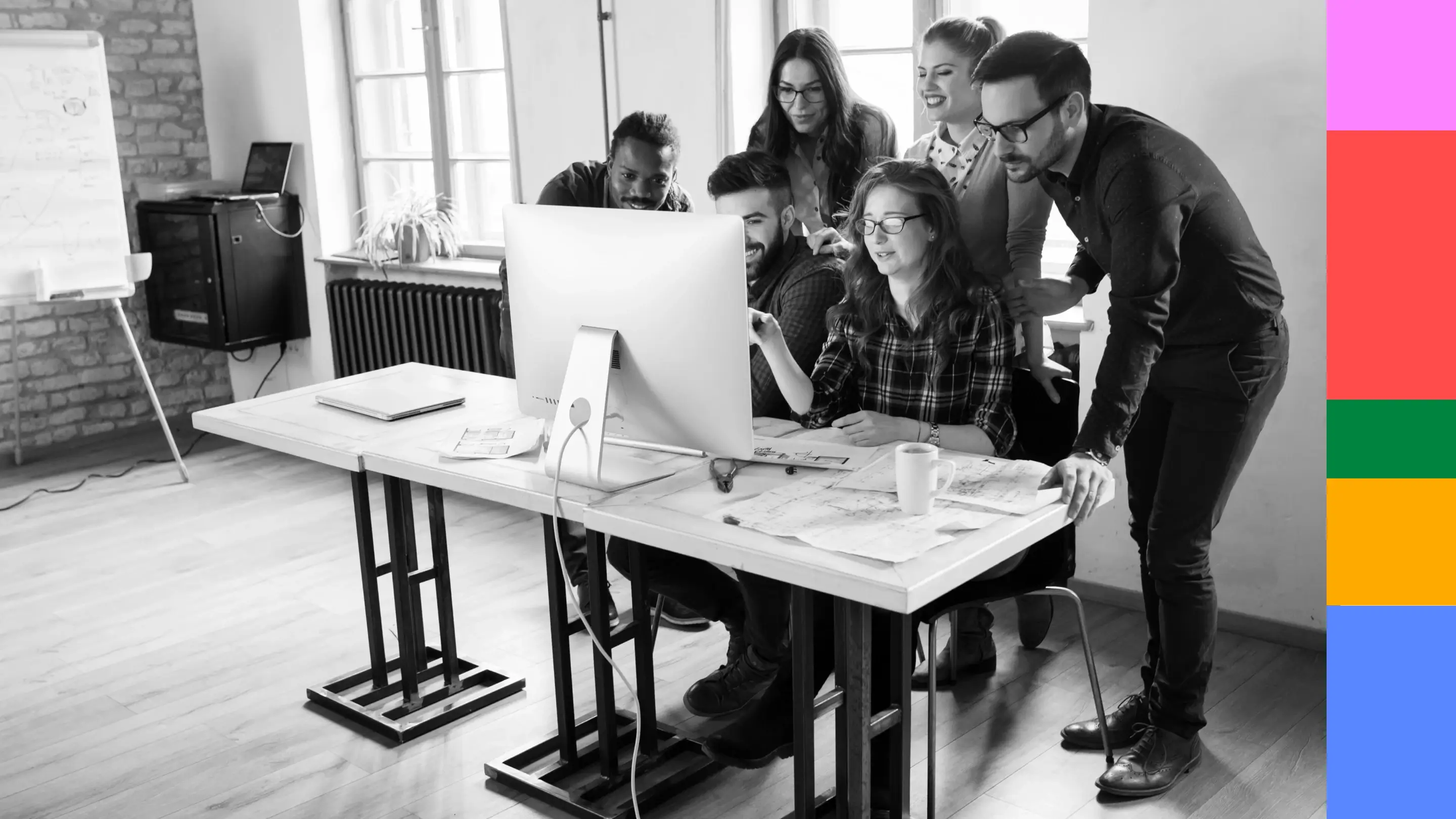
R&D teams are usually pretty set on the research side of things. What they often lack is the ability (or resources) to turn those unstructured findings into aligned priorities quickly. Between interview transcripts, usability notes, survey results, and stakeholder input, the raw material for good decisions is usually sitting in scattered documents and spreadsheets. And making sense of all of that takes far too long.
Manual synthesis is where the bottleneck lives, and why it takes weeks to cluster notes, identify patterns, and produce a readout that stakeholders can act on. While a R&D team sits trying to make sense of their mountain of data, Engineering waits for clarity (and pings you on Slack), Product teams revisit decisions that should already be settled, and the window for timely action narrows with the delay.
A visual collaboration workspace changes this dynamic by giving R&D teams a shared space to organize research, surface themes, and reach alignment in real time. Combined with Mural AI features like clustering, summarization, and translation, teams can compress what used to take weeks of manual effort into minutes of structured synthesis, so insights reach decision-makers while they are still fresh and actionable.
Capture and accelerate research synthesis
When your team adopts a visual workspace for research notes, you replace scattered documents with a centralized, always-current system. Everyone sees the same data instantly, whether they are down the hall or across the globe. For distributed R&D teams, this alone removes one of the biggest obstacles to fast synthesis: the time spent consolidating inputs from different locations and tools before analysis can even begin.
Real-time collaboration
Using a digital canvas for research notes enables simultaneous note-taking without overwriting each other's work, time-stamped entries that maintain a clear record, and comment threads that address questions in context. This makes progress visible and actionable in the moment, helping teams consolidate insights from interviews and observations without waiting for someone to compile a separate report.
Transform research notes into actionable insights
Mural's visual workspace complements your research process by making synthesis tangible. In a shared digital workspace, you can capture group feedback in real time, assign tasks, and track ownership. Features like anonymous voting help prioritize next steps, and AI-powered mind mapping can help explore themes and connections during early-stage research exploration. Every update is visible, and every contributor is acknowledged, which builds trust and makes it easier to trace how decisions evolved.
Where Mural AI makes the biggest difference to you and your R&D team is in compressing the synthesis step. Instead of spending days pulling your hair out and manually sorting sticky notes into themes, teams can use AI clustering to group related insights automatically. And recent updates to Mural give teams even more control: custom title preservation means your cluster labels stay exactly as you wrote them, and Preview Mode lets you evaluate AI-generated groupings before committing them to the canvas. For UX research leads managing large-scale discovery efforts, this turns what used to be days of manual coding into minutes of AI-assisted product research analysis.
Visualizing your research
Get your team's notes from interviews and observations organized into actionable insights with our research notes template. This template provides a structured space to gather all of your research notes in one place and transfer them onto virtual sticky notes, ensuring each note contains only one idea. From there, work with your team to color-code the sticky notes by theme, using features like Private Mode to prevent groupthink (and Bob from taking over the conversation) and allow for honest feedback.
Once your notes are organized, group the color-coded sticky notes together to observe overarching themes and patterns. Mural AI can actually accelerate this step by clustering notes by topic automatically, surfacing connections that might take an exhausted team hours to spot at the end of a long research sprint. Then take those discoveries and immediately create action items and next steps with your team.
Create a shared system for organizing research insights
For R&D teams to succeed, they absolutely must be able to reproduce their results (it’s how they build credibility for their findings). Using a single platform for your entire team minimizes the risk of lost or duplicated data, misaligned methodologies, and inconsistent record-keeping. A shared digital workspace also helps manage the specific challenges of leading research when your team is distributed across locations and time zones.
Improving data management and reproducibility
With shared protocols, built-in templates can standardize how results are captured. When everyone logs findings the same way, your living record is easier to validate and trust. Explore our research summary template for ideas on structuring your documentation.
For Product Managers and UX Designers coordinating research across multiple workstreams, a shared system for organizing research insights is not optional. It’s the foundation that makes stakeholder alignment possible. When insights are centralized and structured consistently, cross-functional teams can review patterns and converge on priorities without rebuilding context from scratch every time. For more on how visual collaboration powers open innovation in R&D, see our related guide.
Create psychological safety in research synthesis
Teams thrive when every voice is heard, and this is especially important during research synthesis, when the way findings are interpreted and prioritized can shape an entire product direction. Psychological safety means creating an environment where team members can share untested interpretations, challenge emerging themes, and raise concerns about what the data might be missing, without fear of being dismissed.
A visual collaboration platform supports this by making project progress visible to all, enabling anonymous input and voting with features like Private Mode in Mural, and creating fast feedback loops so interpretations can grow through many perspectives. When every contributor's input is visible and traceable, synthesis becomes a team effort rather than something shaped by whoever speaks loudest in a meeting.
By creating space for diverse contributions during the synthesis process, your team can validate, refine, or challenge themes in ways that strengthen findings and build shared confidence in the decisions that follow.
Accelerate insight generation and innovation
From compressing the time it takes to organize research data, to giving distributed teams the tools to cluster interview notes and synthesize qualitative research in a shared space, Mural helps R&D teams move from raw inputs to structured insights with less friction and more speed.
When you use Mural to visualize your research data and take advantage of AI features like clustering, summarization, and multi-node actions, your team can unite people and information in one place. For R&D leaders looking to reduce synthesis drag and get structured insights in front of stakeholders faster, activating Mural AI is the most direct path to compressing the gap between research and aligned action.
For teams ready to go further, see how to optimize your broader R&D workflows once synthesis is no longer the bottleneck.
Want to try it for yourself? Explore our research templates and our research and analysis resources for R&D teams, or connect with us for a live demo.


.avif)