

.avif)



.avif)

Why Mural for research and analysis
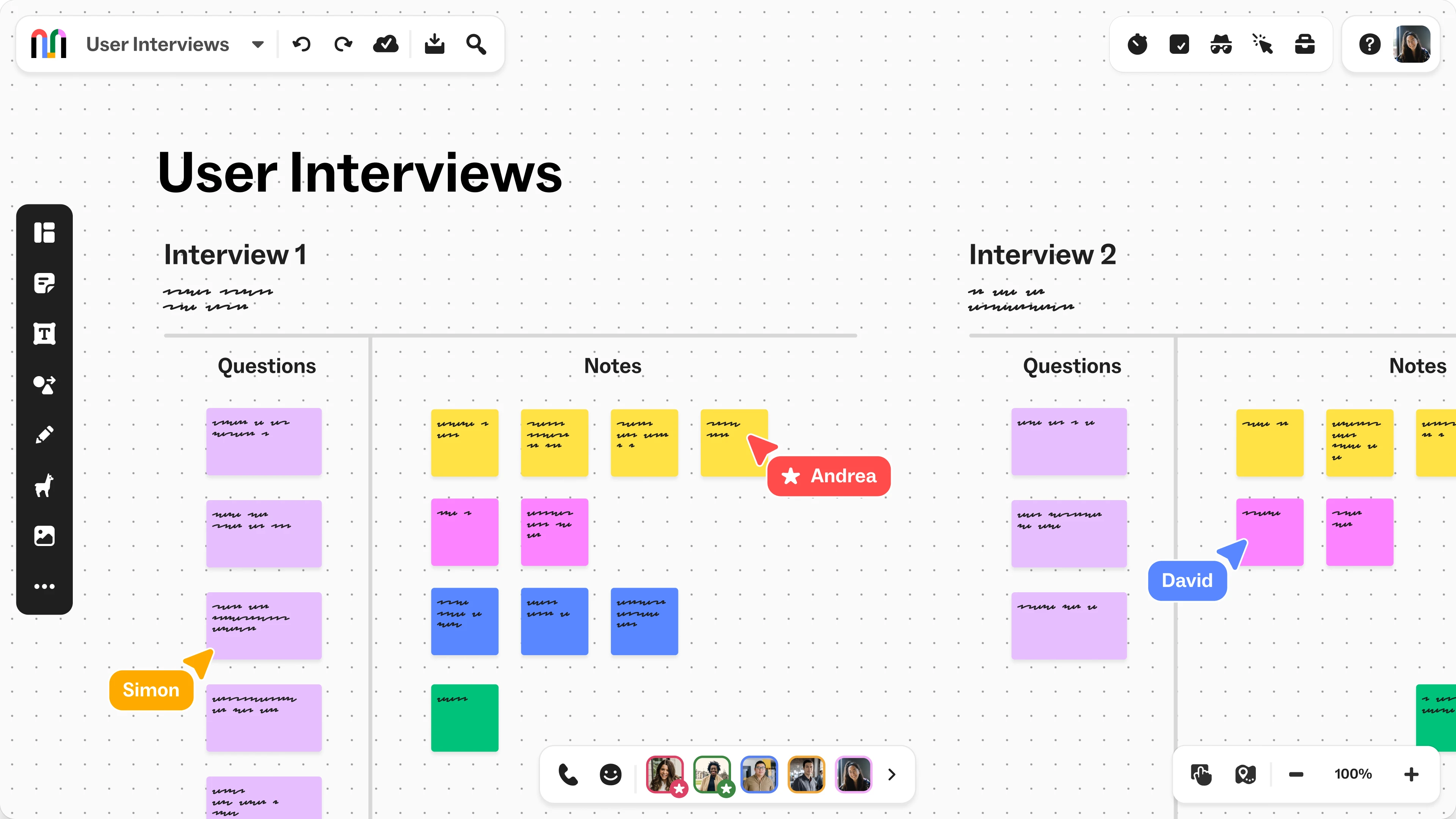
When you’re working with diverse data sources, distributed teammates, and evolving goals, it’s easy for research to become fragmented. Mural keeps your work structured, connected, and actionable. Whether you’re capturing user interviews, organizing survey data, or synthesizing findings across departments, your team can use it for:
- Cross-functional projects with a collaborative research tool
- User interview synthesis and customer feedback analysis
- Market and trend synthesis
- Product concept validation
With Mural, everyone can contribute in real time or asynchronously, so no ideas or insights get lost, and decisions happen faster.

The benefits of using Mural for research and analysis
- Centralized insights: Bring data from multiple sources — notes, images, links, and files — into one shared research workspace so the whole team has full context.
- Faster synthesis: Use tags, color-coding, and frameworks to identify patterns quickly and move from raw data to themes, requirements, and opportunities in less time.
- Structured flexibility: Try ready-made templates to start quickly, and adapt them to your workflow as findings evolve.
- Iterate faster: Invite unlimited guests, run engaging live sessions, or gather asynchronous feedback so contributions aren’t limited by location or time zone.
Common challenges with research (and how Mural helps)
Collaborative data analysis can be complex, especially when R&D teams are spread across locations, tools, and time zones. These common obstacles slow down insights and decision-making, but Mural’s flexible, visual workspace helps R&D teams overcome them with clarity and speed. Here are a few challenges:
- Fragmented communication: When research happens across tools or email threads, insights get lost.
- Slow synthesis cycles: Without clear frameworks, teams spend too much time organizing data.
- Limited stakeholder engagement: Remote or busy stakeholders may struggle to participate.
- Difficulty adapting to new findings: Rigid workflows make iteration cumbersome.
Best practices with Mural for research and analysis
If you’re ready to start organizing research findings in one place, Mural’s can help. Here are a few best practices to get your work moving.
- Pick a template that fits your project type to guide data collection from the start. Working with stakeholders
- Assign consistent colors for data sources, themes, or priority levels to make synthesis faster and clearer in stakeholder reviews.
- Use tags to capture categories like “Pain Points” or “Opportunities” and apply filters to focus work in synthesis sessions.
- Try features like timers, voting, and private mode to keep workshops engaging and collaborative, even with large groups.
- Document conclusions and next steps directly in the canvas so insights move smoothly into implementation.
- Use Mural’s AI-powered features to rapidly summarize findings and find key themes based on your research inputs.
%20(1).webp)
.webp)
.webp)