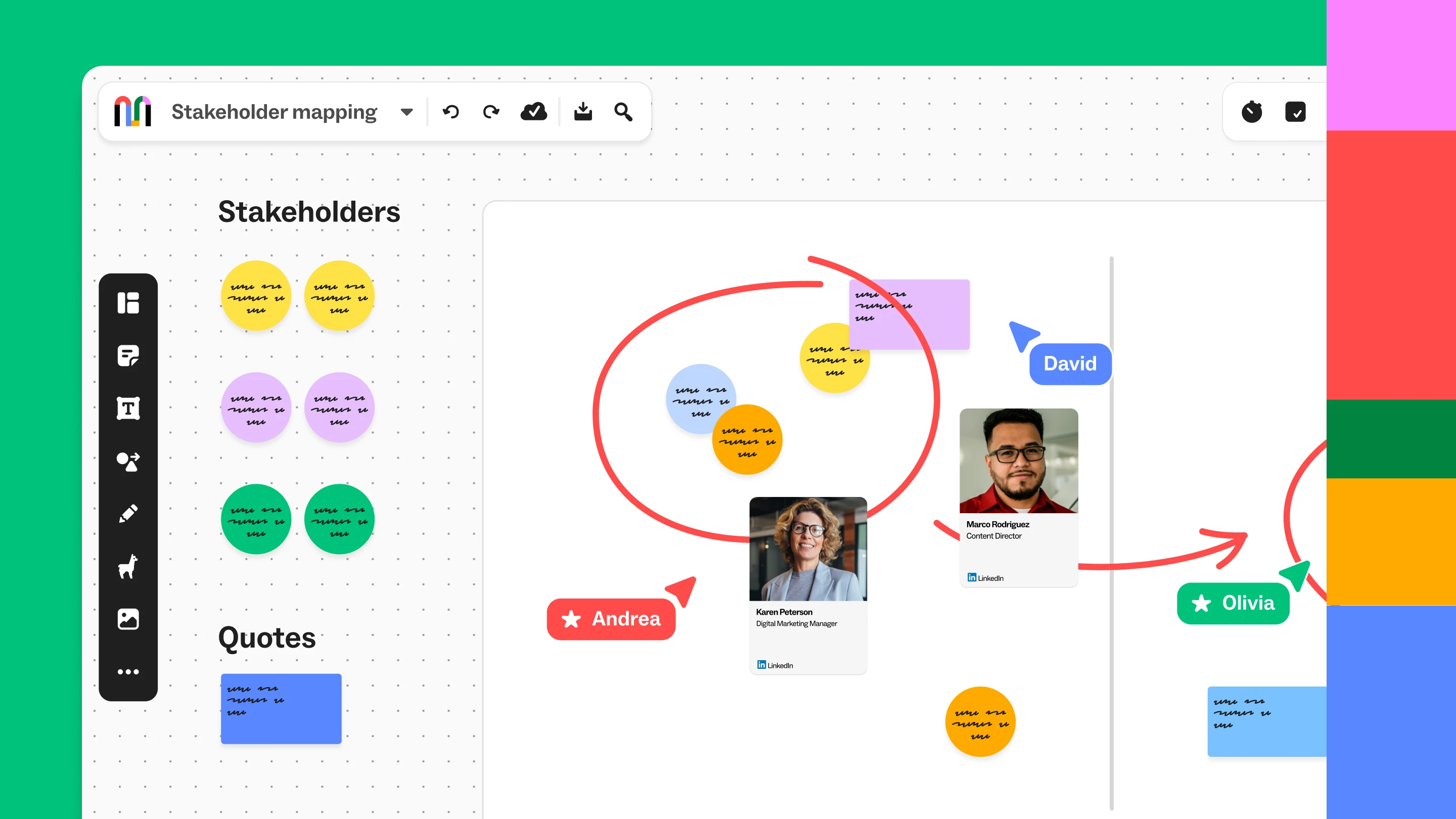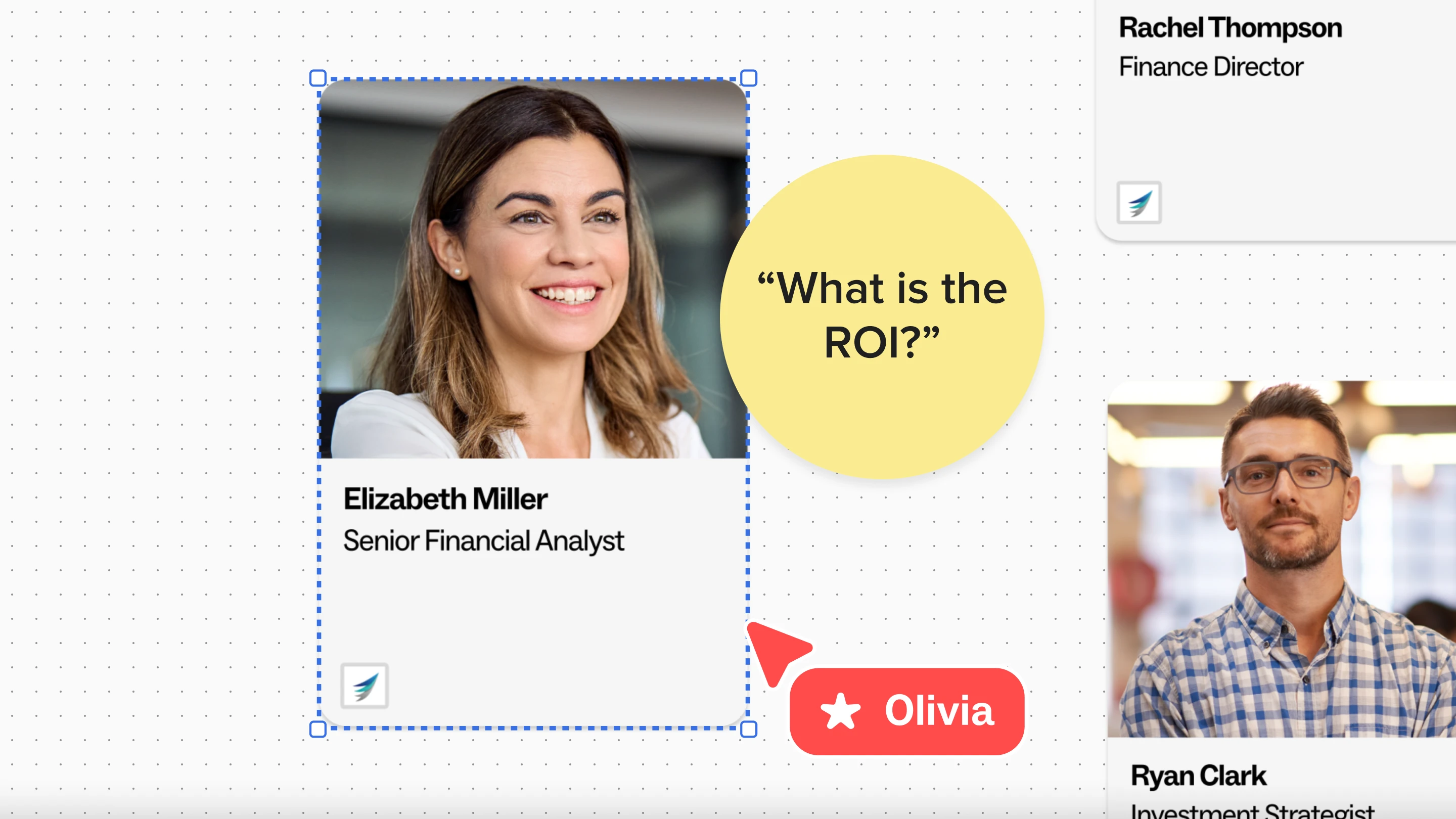
Stakeholders can propel your project to success…or quietly derail it in the background. Letting their involvement “just happen” isn’t really an option. You need a game plan for how you’ll work together. One that sets expectations, keeps everyone pointed in the same direction, and builds trust from day one.
A thoughtful stakeholder engagement strategy turns passive spectators into active participants. Teams collaborate more smoothly, customers lean in, and communication stops getting buried in email threads. We have 12 tips on how to get everyone genuinely invested, not just CC’d.
What is stakeholder engagement?
Stakeholder engagement is the process of listening to, informing, collaborating with, and involving stakeholders in a project. Its purpose is to determine the most important priorities, establish the most effective forms of communication, and build trust with your stakeholders.
A stakeholder might refer to a person, group, or entity that has an interest in a project or will otherwise be affected by it. This could refer to clients, your own team members, or a third party that your client and team are collaborating for, like an interest group. (Engaged stakeholders are different from stakeholder engagements, like a client kickoff call or working session.)
Why you should prioritize stakeholder engagement
Putting stakeholder management strategies first, when done with purpose, builds stronger relationships and greatly speeds up stakeholder alignment across the business. Done well, it can produce tangible benefits.
Reduce potential risks and conflict
Building productive relationships with a stakeholder communication plan reduces the likelihood of client dissatisfaction, team uncertainty, and other project roadblocks. For sales teams, this means walking into the final meeting with every objection already addressed. For product teams, it means fewer surprises during development and a smoother path to release.
Improve decision making
Good stakeholder collaboration strategies empower decision-makers to assess situations, solve problems, and get work done. Engagement fosters connection and clarifies direction.
Increase the pace of progress
By removing common roadblocks, encouraging open communication, and defining decision processes, a successful project stakeholder engagement approach accelerates meaningful progress. Sales can move deals forward without stalls, R&D can iterate quickly, and marketing can launch coordinated campaigns ahead of schedule.
12 tips to build stakeholder engagement
Whether you’re just starting a project or refreshing your approach, here are 12 tips for stakeholder engagement
1. Understand how your stakeholders will be involved
To successfully collaborate with clients or coworkers, it’s important for both of you to have an understanding of key stakeholders and how they will be involved throughout a project. Start by mapping stakeholders to understand their interest, influence, and expected contributions. This is a cornerstone of how to build stakeholder engagement and create clear stakeholder alignment.
Consider the following categories of stakeholders:
- Low interest, low influence: Keep this group informed, but only with minimal contact.
- High interest, low influence: Keep this group informed while monitoring them more closely.
- Low interest, high influence: Regularly engage and monitor this group to keep them satisfied. Just don’t overdo it.
- High interest, high influence: Actively engage this group regularly and share any and all information. Focus your effort here.
The stakeholder analysis template helps minimize confusion on who is who, clarifies responsibilities, and catalyzes a transition from strangers to collaborators.
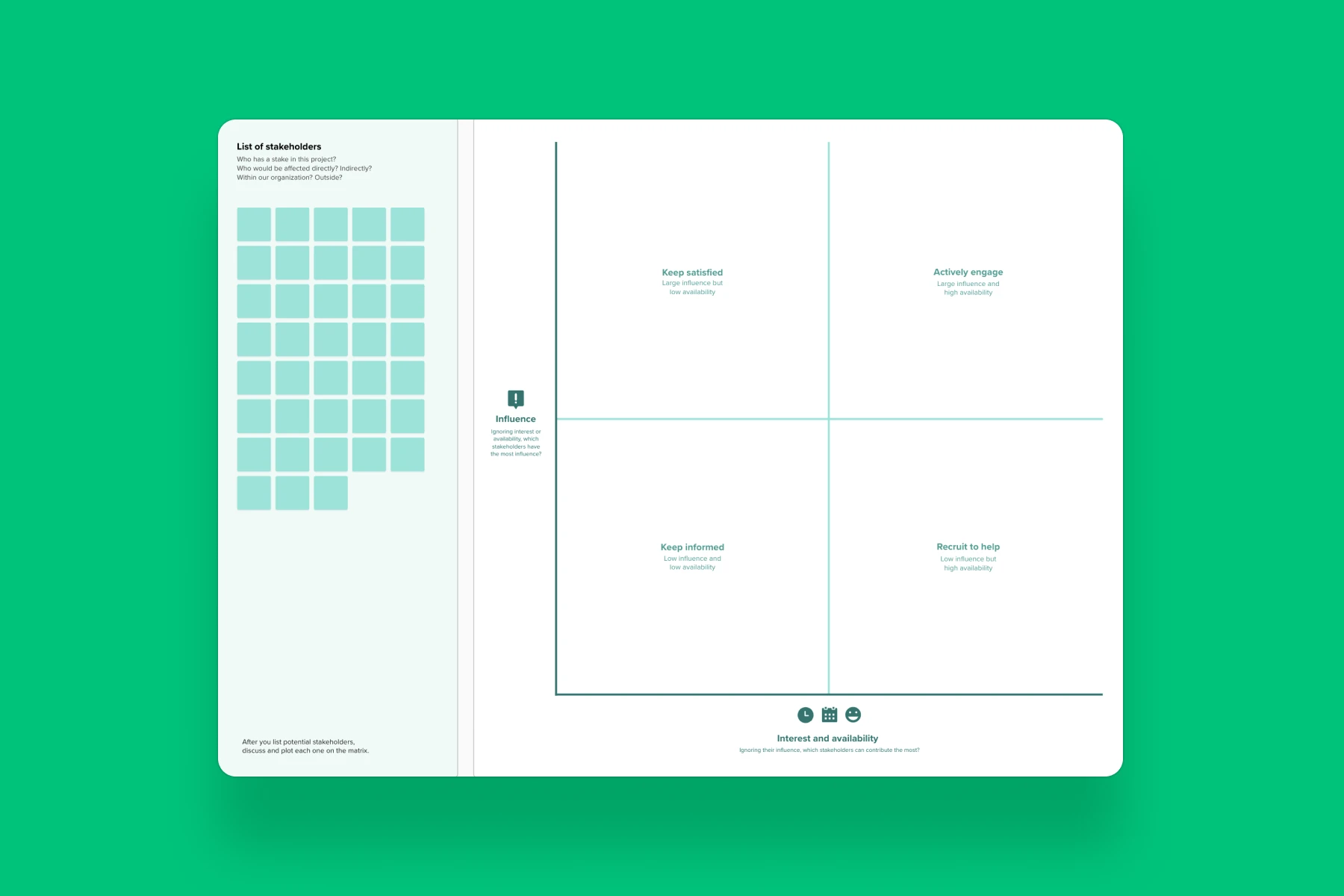
Once you understand different stakeholder involvement, you’ll be better prepared to start coming up with engagement strategies that work best for each of them. Just remember: Stakeholders are individual people, so think of your different groups as flexible and fluid, rather than set in stone.
Pro tip: Be sure to create a stakeholder engagement plan to document how you'll communicate and engage with stakeholders.
2. Identify key concerns and areas of interest
Discover priorities and concerns to inform your stakeholder communication plan. For sales, early alignment shortens negotiations; for product, it prevents costly rework.
As you separate your stakeholders out into groups, ask them questions in order to identify their key areas of interest and most important concerns. Make sure you gain clarity around these issues, and try to establish a sense of two-way communication so that you can continue to listen and clarify if and when their needs change.
3. Set expectations for stakeholder communication
Defining how and when you will communicate at the outset of a project can go a long way toward eliminating unnecessary friction. Define how and when you’ll engage stakeholders, and document agreements in a shared space so everyone moves forward with a common reference point.
Try to strike a balance between the needs and preferences of your stakeholders with your own resources and capacity. And if you need to push back, explain and give reasons in clear terms. Doing so will help build trust and transparency, contributing to more productive stakeholder relationships.
4. Leverage co-creation from the start
Invite stakeholders into solution design early to accelerate alignment. Make a strategic decision to involve, or at least invite, each stakeholder into the design and creation process. This might be a collaborative wireframing session for product, a creative brainstorm for marketing, or a strategy sprint that helps sales refine a proposal together with the client.
By doing this at the outset of a project, you can give them the opportunity to influence and create solutions that answer their concerns and challenges. This will help ensure your stakeholders remain central and active contributors.
5. Conduct regular check-ins
Maintain ongoing dialogue to strengthen collaboration with stakeholders. Use short, focused check-ins to surface blockers quickly and capture alignment wins, whether it’s a green light on a product feature, a finalized content concept, or a confirmed launch date.
6. Streamline the approval process
Defined roles, shared review timelines, and clear “who signs off when” guidelines keep sales proposals, product releases, and marketing campaigns on schedule. Every stakeholder should know their role and be clear on the approval process so that you can eliminate bottlenecks, improve the process of getting buy-in, and ensure every deadline is met.
7. Hold small retrospectives after key project milestones
Reflect and iterate on your stakeholder management strategies. Sharing concise summaries of what worked well and what to improve builds trust while turning lessons into action quickly.
Seize the moment after delivery to regroup with your stakeholders. This can be an opportunity to celebrate a win and applaud individual contributors, or to analyze what could have gone better. Retrospectives can show you continue to actively listen and communicate to those involved with the project. Even if things didn’t go perfectly, that can be enough to keep everyone engaged.
8. Identify possible points of disruption
Anticipate communication challenges in your stakeholder engagement strategy. Plan early for misaligned priorities or conflicting work styles so momentum doesn’t get lost mid-project. Anticipating where communication or processes may break down can be invaluable to maintaining active and engaged involvement.
For instance, perhaps you recognize that the priorities of two different stakeholders are in conflict, or they both have very different styles of communication. By planning for this beforehand and putting in place a solution, such as an intermediary to help them talk, you can keep the project’s momentum going. If you’re identifying themes around concerns or perspectives in real time, use Mural AI™ to synthesize or summarize quickly and stay focused on the conversation.
9. Come up with a process for conflict resolution
Conflicts will arise. Plan in advance for resolution to keep stakeholder alignment intact. Whether it’s resolving a timeline dispute, aligning on new requirements, or balancing scope, having a process avoids escalation and maintains trust.
You could even take this a step further by anticipating different types of conflict that are bound to occur, such as disagreements over pricing, processes, communication methods, and scope. This way, you can immediately direct your resources toward solving the issue and building consensus, rather than trying to find out what is wrong.
10. Look out for collaborative opportunities
Just as you should watch out for possible points of disruption, so should you pay attention to areas where you and your stakeholders could benefit. One of your stakeholder collaboration strategies might involve introducing stakeholders whose expertise could unlock new solutions, partnerships, or efficiencies. Or maybe one stakeholder has access to a resource another could use.
11. Be selective about the tools you use
Adopt tools that enhance how to engage stakeholders effectively. Choose platforms that integrate with your workflows and support both real-time and asynchronous collaboration.
Just as important as the way you communicate and collaborate is how you do it too — and that means paying attention to your tools. For instance, marketing and email automation software can make it more efficient to stay in close contact with stakeholders, while document management and online whiteboarding platforms like Mural can make remote and asynchronous collaboration easier. Whichever tools you choose, just make sure all your stakeholders are aligned on using them.
12. Write out engagement reports and solicit feedback
Capture and analyze insights at project end for future stakeholder engagement examples and process refinements. After a project wraps and stakeholders disperse, don’t let any knowledge go away with them. Capture what you learned in the process by drafting a summary (let Mural AI™ help!) that details the efforts you made, what went well during the engagement process, and what may still need work.
Don’t forget to leave room for their feedback. Whether you solicit this through an open-ended reply form or a more specific survey, stakeholder responses can be invaluable.
Tips for getting feedback from stakeholders:
- Allow for anonymous feedback
- Prioritize feedback based on stakeholder influence
- Set up regular milestones and stages during which to collect feedback
Need more tips? Check out our guide on collecting stakeholder feedback.
Level-up your stakeholder engagement strategy to drive real results
Turn stakeholders into hands-on collaborators, and go beyond simply keeping people “in the loop” to accelerate deals and de-risk innovation. When Sales and R&D are aligned in one visual workspace, teams surface better ideas, move faster from concept to prototype, and keep everyone accountable to outcomes. Engage your stakeholders visually for faster alignment and outcomes. Book a demo to learn more!