On this page
Use Year in review template
Get started
Individually reflect on your year and create a vision for the next
Capture wins, lessons, and goals to align your team for next year.
Love it or dread it, the annual review isn’t going anywhere. The real challenge? Walking into a year-end team review with scattered notes, half-remembered milestones, and fuzzy priorities.
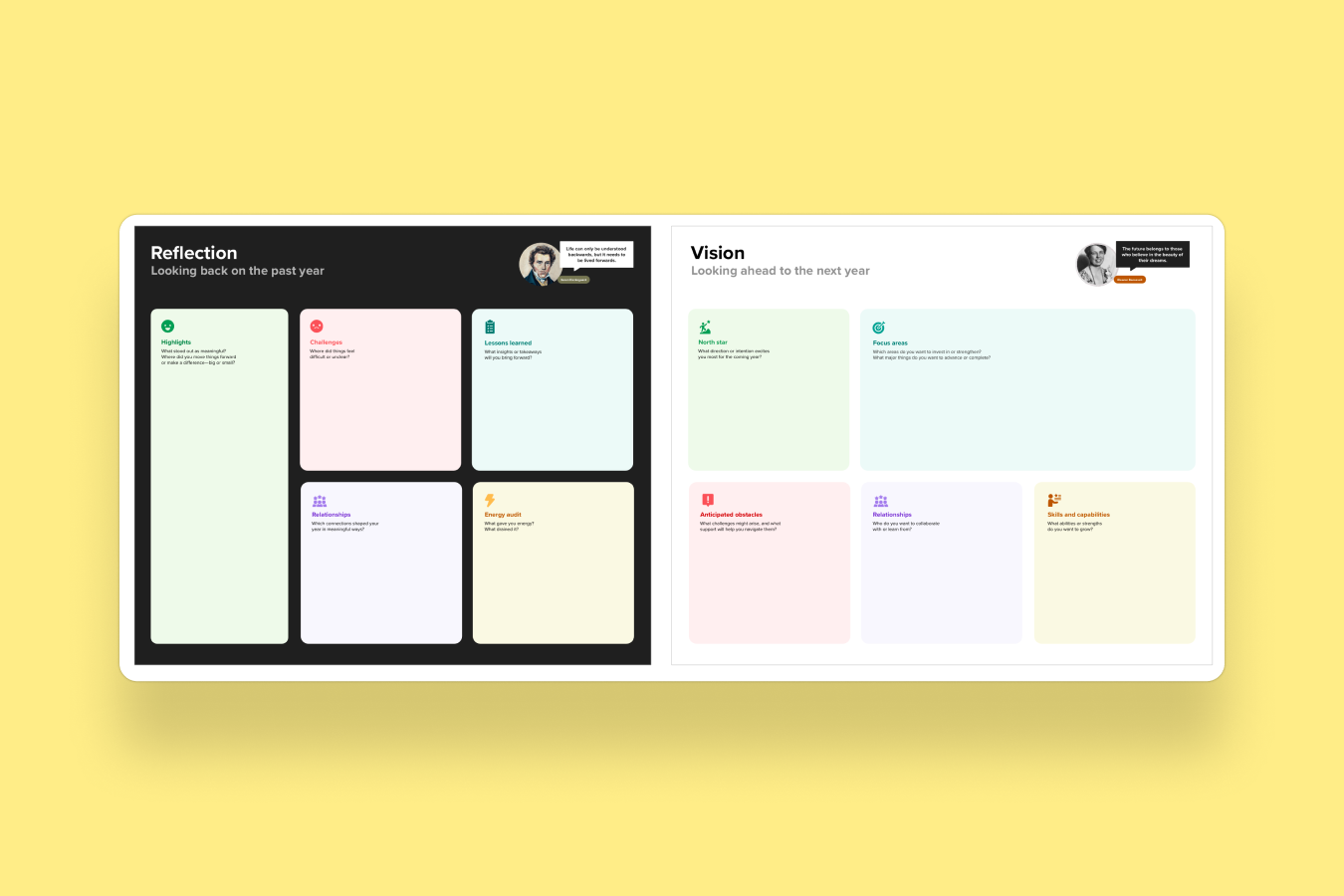
Mural’s year in review template gives you a structured, visual way to capture your year-end reflection and move seamlessly into planning. On one side, you’ll reflect on the past year’s highlights, challenges, lessons, relationships, and patterns in your energy. On the other, you’ll set a clear vision for the year ahead, including your guiding direction, most important focus areas, anticipated obstacles, growth opportunities, and collaboration priorities.
For Sales teams, this means capturing key deal wins and losses alongside pipeline trends, then setting targets to shorten the sales cycle and improve conversion. For R&D teams, you can document product milestones, technical challenges, and innovation highlights, and align next-year priorities around speed-to-iteration, reliability, and emerging opportunities.
A year in review template helps you map out the past year’s milestones, lessons, challenges, relationships, and energy patterns to understand what worked and where you want to improve.
It’s more than a year-end retrospective exercise. You’ll leave with a narrative of the year and a practical plan to reflect and set goals, feed into yearly goal planning, and support yearly team planning moving forward.
Tip: Pair it with our End-of-year retrospective template if you want deeper end-of-year reflection questions for your workshop.
Duplicate your mural for the current year (e.g., “[Year] Reflection & [Year] Vision”) and clarify the goal is an honest record of achievements, challenges, and goals, not a performance trial.
Review the year’s highs and lows, lessons learned, meaningful relationships, and what gave or drained your energy.
Walk through highlights and trends collaboratively. Use end-of-year reflection questions like: “What surprised us most?” or “Where did we consistently get stuck?”
Define your guiding direction, focus areas, anticipated obstacles, key relationships to build, and skills or capabilities you want to grow using a yearly goal setting framework.
Agree on your top goals and check in on them quarterly to maintain year end alignment and momentum.
Related templates
It structures your annual review, making year end reflections more thorough and actionable. It also creates inputs for year end team review sessions and builds stronger year-end alignment across departments.
Two sections: Reflection: achievements, challenges, lessons, relationships, and energy audit; and Vision: guiding direction, focus areas, anticipated obstacles, key relationships, and skills or capabilities to grow.
Share the template, complete reflections asynchronously, meet to discuss highlights, shift to vision planning, and use your yearly goal setting framework to set priorities. Schedule periodic check-ins to adjust and stay aligned.