On this page
Template use cases
Use One year roadmap template
Get started
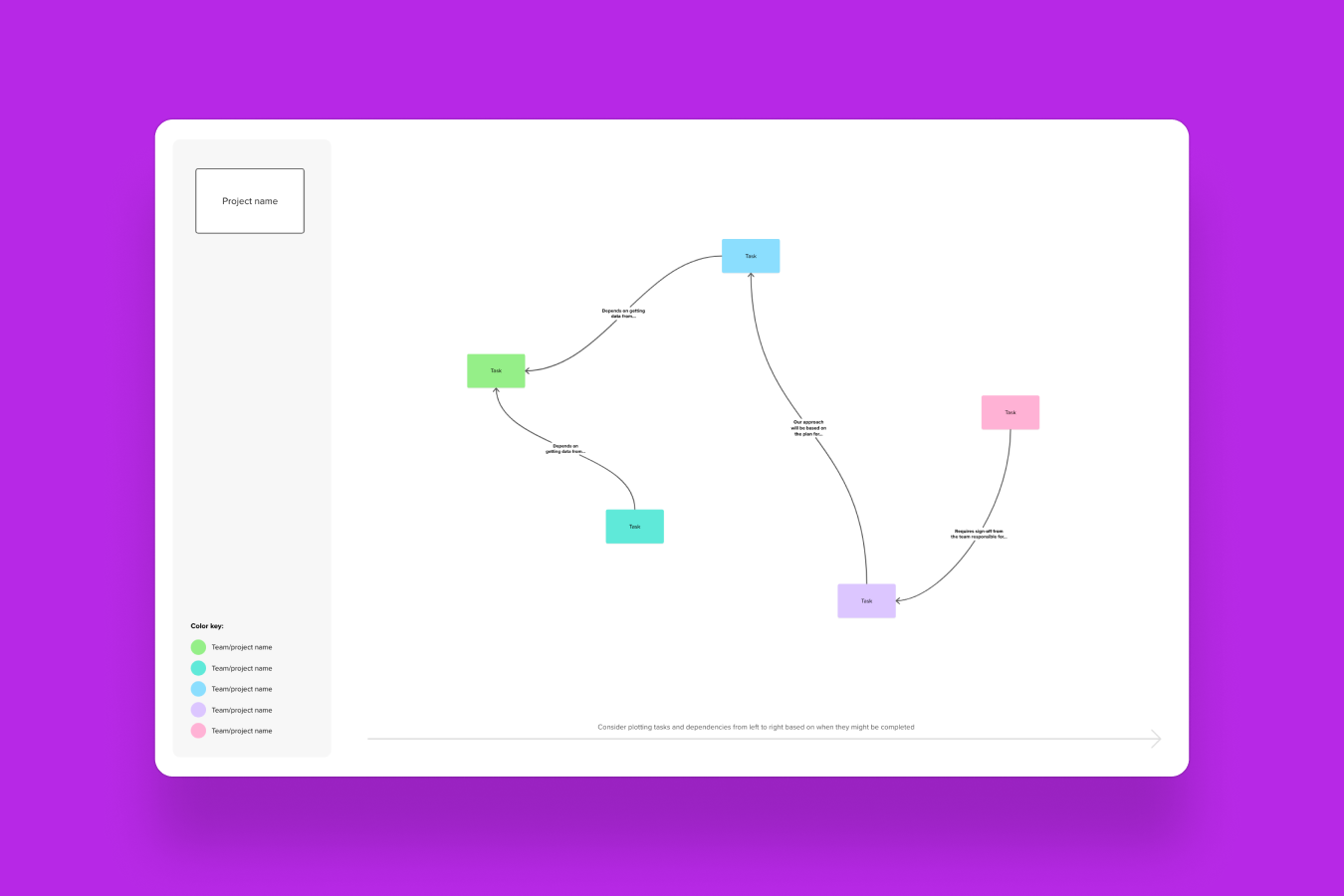
Plan a year month-by-month using Gantt Chart-style roadmap

A one year roadmap template is a great way to give your team a single, shared view of everything you're working toward over the next 12 months. Instead of toggling between spreadsheets, slide decks, and project trackers, you can map goals, initiatives, and milestones on one visual timeline and keep everyone aligned as priorities shift.
That alignment matters more than most teams realize. According to PMI research, 37% of projects partially fail because of unclear goals. An annual roadmap template tackles that problem head-on by connecting day-to-day work to the bigger picture. When teams can see how their projects fit into the year's strategy, they make better decisions about where to focus and what to deprioritize.
A one year roadmap template is a pre-built visual framework that organizes your goals, projects, and key milestones across a 12-month timeline. It’s a bit like the connective tissue between your annual strategy and the actual work teams do week to week.
Most roadmap templates include rows for different teams, workstreams, or strategic themes, with columns representing months or quarters. You plot initiatives along the timeline, mark dependencies, and assign ownership so that everyone from leadership to individual contributors can see what's happening, when, and why.
Unlike a static project plan, a one year roadmap is meant to evolve. It's a living document that you revisit regularly, adjusting timelines and reprioritizing as new information surfaces. In Mural, that means your roadmap lives on a shared canvas where stakeholders can add sticky notes, leave comments, and contribute updates asynchronously, without scheduling another meeting.
The right annual roadmap template should do more than look good on a screen. Here's what to look for when you pick one for your team.
Gives you a full-year view so you can plan across quarters without losing sight of the big picture.
Lets you organize work by department, strategic priority, or workstream, depending on how your org operates.
Highlights key dates and deliverables so nothing falls through the cracks.
Makes it clear who's responsible for each piece of work.
Allows multiple contributors to update the roadmap in real time or async, reducing bottlenecks.
Adapts to different planning styles, whether you prefer a Gantt-style timeline, a swimlane view, or a kanban-inspired layout.
In Mural, the one year roadmap template includes all of these features on an infinite canvas. You can also use
Annual planning isn't just a calendar exercise. A yearly planning roadmap gives your organization a framework to answer the hard questions: What do we prioritize? Where do we invest? How do we know we're on track?
With this template, you can:
Support strategic and operational planning in one view. Leadership gets the high-level picture; teams get the detail they need to execute.
Building a yearly roadmap doesn't need to be a painful, multi-week ordeal. Here's a practical approach to getting your annual roadmap template from blank canvas to a working plan your team actually uses.
Start with the outcomes that matter most to your organization. These might be revenue targets, product launches, market expansion, or operational improvements. Keep it to three to five strategic priorities so the roadmap stays focused rather than becoming a dumping ground for every request.
Organize the work that supports each goal. Group initiatives by team, workstream, or strategic theme, whichever makes the most sense for your organization. In Mural, you can drag sticky notes into swimlane rows and color-code them by owner or priority. If you're building a product roadmap, you might separate rows by product area; for a company-wide roadmap, you might use departmental rows instead.
Place each initiative along the 12-month timeline based on when it starts, when key milestones land, and when it's expected to wrap. Be honest about how long things actually take; padding timelines early is always cheaper than compressing them later.
Draw connections between initiatives that depend on each other. If the engineering team can't start building until research is complete, that dependency should be visible on the roadmap. This is where a visual roadmap format pays for itself, because it's much harder to see these relationships in a spreadsheet.
Every initiative needs a clear owner. Tag team leads or project managers directly on the roadmap so there's no ambiguity about who's driving what. Then share the roadmap with stakeholders and use the first review to confirm that the plan reflects reality, not just ambition.
Set a regular cadence for roadmap reviews, monthly at minimum, quarterly at most. Update timelines, reprioritize as needed, and archive completed work. A roadmap that nobody looks at after January is worse than no roadmap at all. In Mural, Facilitation Superpowers® features like voting and timers can keep review sessions focused and productive.
A one year roadmap template is useful any time your team needs to coordinate work across multiple months, people, or priorities. Here are some of the most common scenarios.
The most obvious use case. Leadership defines the year's strategic priorities, and the roadmap becomes the visual plan that connects those priorities to actual projects and timelines.
Product teams can map feature releases, research sprints, and technical debt work across the year. A visual roadmap makes it easier to balance short-term delivery with longer-term bets. For quarterly breakdowns, you can supplement this with the one quarter roadmap template.
When a large initiative spans marketing, engineering, design, and operations, a shared roadmap keeps everyone oriented. Rather than each team maintaining their own plan, one visual timeline shows how the pieces connect.
Map your objectives and key results to the calendar. Seeing when each KR is expected to be achieved helps teams pace their work and spot misalignments early.
Example: A mid-size SaaS company uses the one year roadmap template to plan its go-to-market strategy. The VP of Product maps three major feature releases across the year, the marketing team plots campaign launches around each release, and the sales team layers in enablement milestones. Because everything's on the same canvas, the leadership team can immediately see that Q3 is overloaded and rebalance work before anyone's scrambling.
Roadmaps fail for the same reasons projects do: vague goals, poor communication, and plans that don't survive contact with reality. Here are ways to avoid those traps.
A one year roadmap template gives your team long-term visibility into what's planned, what's in progress, and what's coming next. It improves alignment by making priorities visible to everyone, not just the people who attend planning meetings. It also makes goal tracking more concrete, because each objective is tied to a specific timeframe and owner. For distributed or hybrid teams, a shared visual roadmap reduces the need for constant check-ins and status updates, because the plan is always available and always current.
The best roadmap planning template is one that's visual, collaborative, and flexible enough to adapt as your plans change. Static documents and slide decks tend to go stale quickly because they're hard to update and share. A platform like Mural gives you an infinite canvas where you can build your roadmap with sticky notes, connectors, and color coding, then invite your team to contribute directly. Mural also includes AI features that can help cluster related initiatives, generate ideas for planning workshops, and summarize discussion notes. You can start with the one-year roadmap template and customize it to your team's structure and workflow.
Group your projects by the dimension that matters most to your organization: team, strategic goal, product area, or customer segment. Within each group, place initiatives along the 12-month timeline based on planned start and end dates. Use connectors or dependency lines to show relationships between initiatives.